.svg)

Every year, branding trends come and go. But 2026 is different — a few shifts happening simultaneously are genuinely changing the calculus for developers and property managers. If your brand was built three years ago and hasn't been revisited, it may already be working against you.
The built environment has always communicated something about who belongs here, what kind of life is possible inside these walls, whether this place is worth noticing. But in 2026, the signals renters and tenants read before they ever step foot on a property have multiplied. And the brands that aren't sending the right ones are losing deals before the conversation even starts.
Here are five shifts we're watching closely—and building for—right now.
1. The Minimalism Era Is Over
For the past decade, CRE branding followed a single aesthetic playbook: clean sans-serif wordmarks, white space, muted palettes, stock photography that could belong to any building in any city. Safe. Forgettable.
The pendulum is swinging. Renters and buyers scroll fast, and the brands that stop them are the ones making distinctive choices, bolder typography, real photography of actual spaces rather than staged lifestyle shots, and a voice that sounds like a person wrote it rather than a committee approved it.
This doesn't mean loud or chaotic. It means being willing to have a point of view. The properties that will lease fastest in 2026 are the ones that look and sound like a specific place with a specific character, not a placeholder for someone's future life.
2. Hyperlocal Identity Now Outperforms Portfolio Branding
Most renters search close to home. They're not comparing your community to one across the country, they're comparing it to the three buildings within a 10-minute drive. That makes hyperlocal differentiation worth far more than portfolio brand recognition.
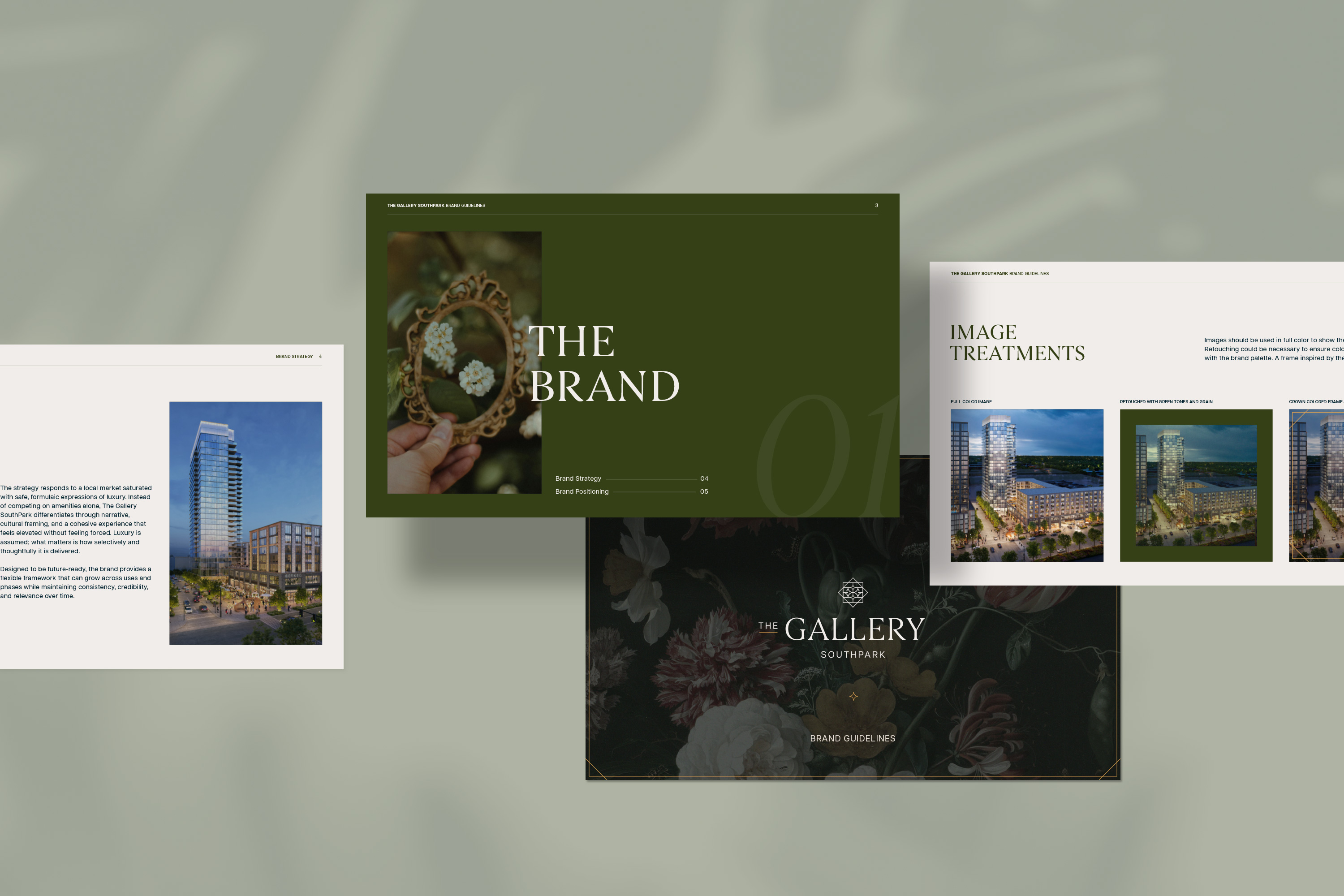
The smartest operators are moving away from templated community identities that feel stamped from a corporate mold. The properties winning leasing seasons are the ones embedded in their neighborhood, referencing local culture, architectural heritage, or geography in their naming, visual language, and messaging.
This is harder to execute than templating. But it's also a real moat. A competitor can undercut your price. They can't replicate the specific feeling of belonging to a specific place.
3. AI Discovery Is Changing What Brand Consistency Actually Means
ChatGPT, Perplexity, and Google's AI Overviews are increasingly part of how renters and tenants find and evaluate properties. These tools don't just serve links, they synthesize, summarize, and recommend based on credibility signals across the web.
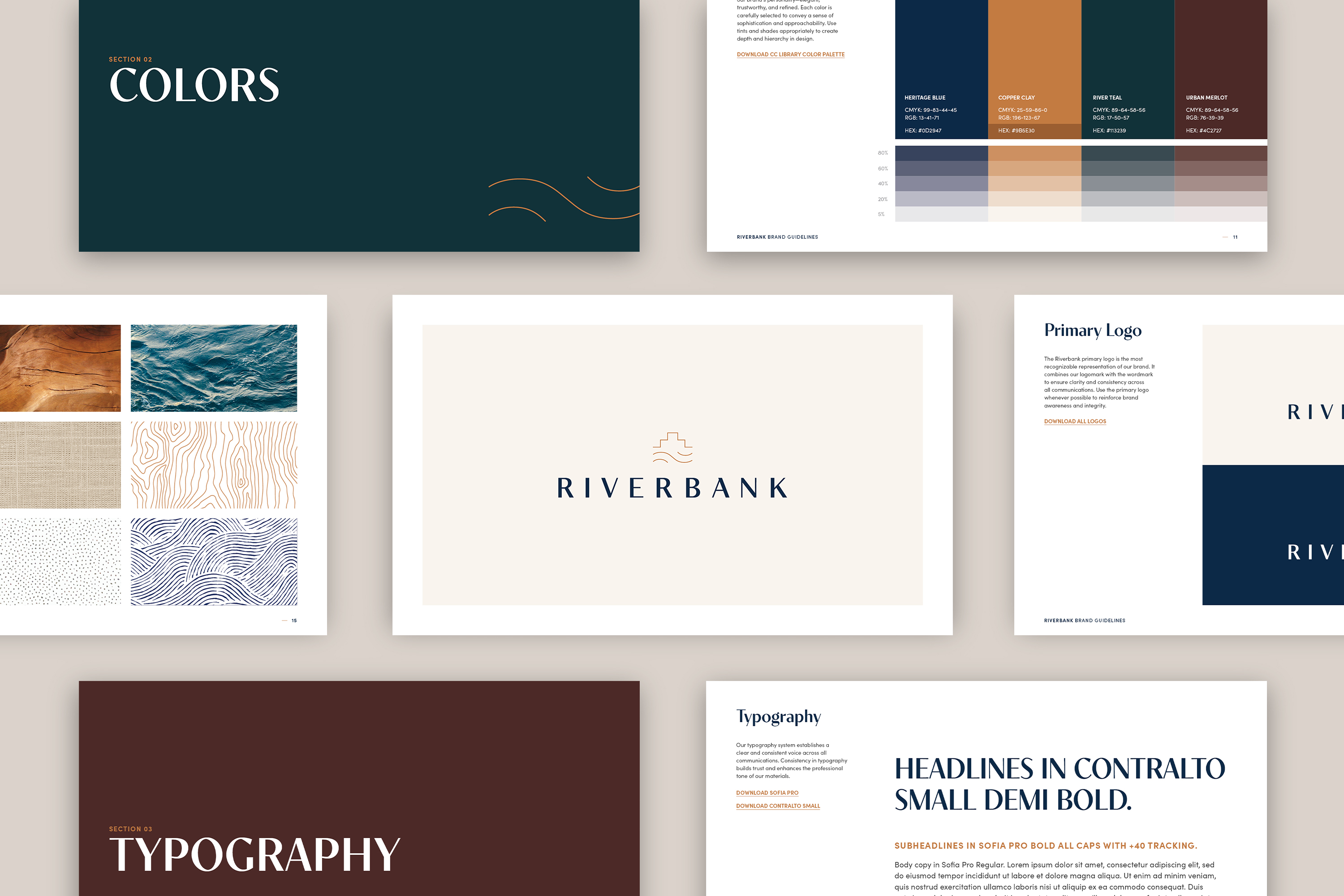
What that means for CRE brands: your identity has to be legible and consistent across more touchpoints than ever. Your website. Your ILS listings. Your Google Business Profile. Your review responses. Your social captions. If these tell slightly different stories—different names for amenities, different positioning, conflicting price signals—AI discovery treats you as less credible.
The brand consistency work that used to matter primarily for impressions now has direct implications for how discoverable you are.
4. Pre-Leasing Brand Investment Is Non-Negotiable
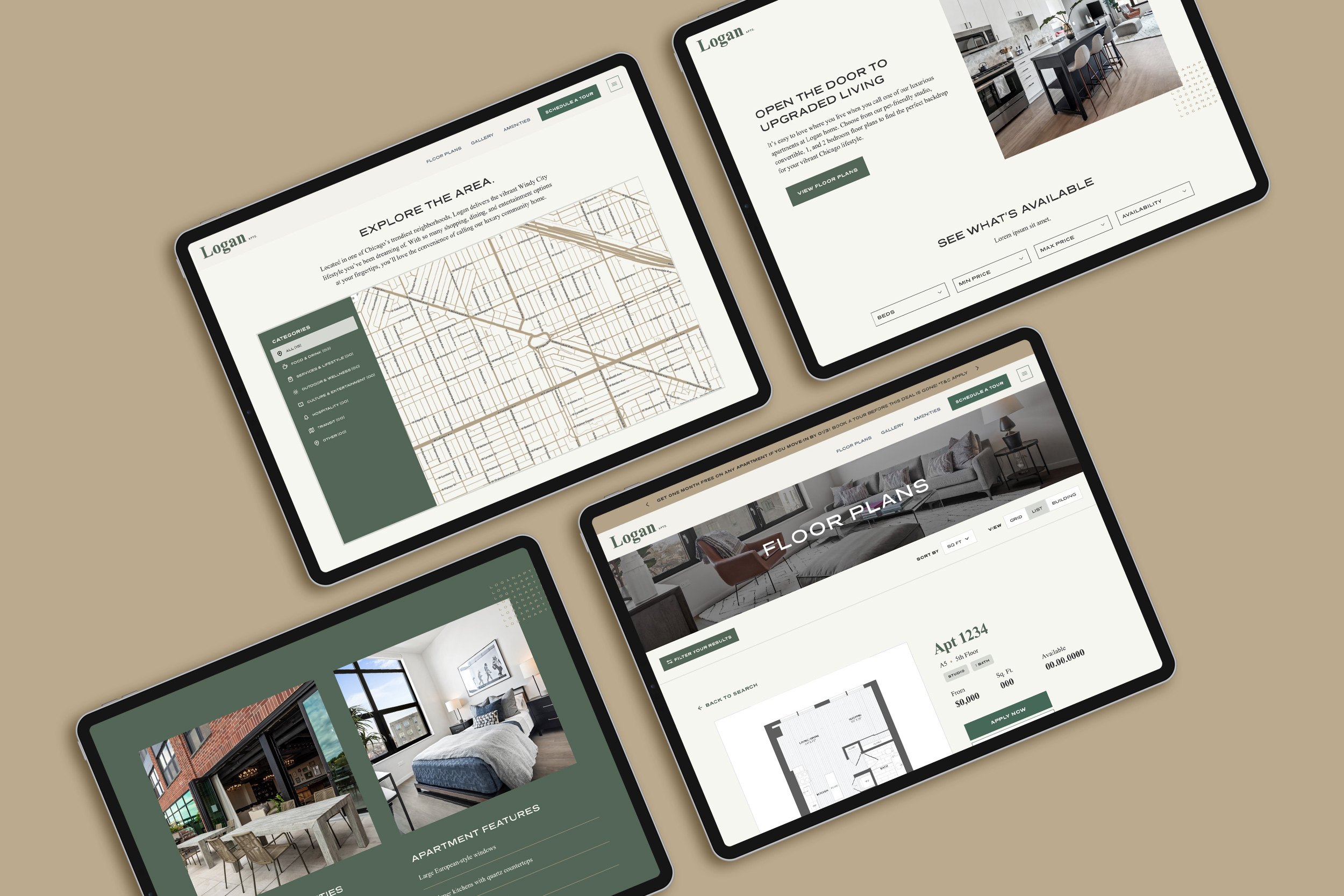
Properties that invest in brand and web before opening consistently lease faster and at higher rates than those that treat branding as a post-construction task. A fully realized brand identity, including a property website that's live before the first unit is delivered, puts you on the shortlist of prospective renters who are often making decisions 6 to 12 months out.
By the time your doors open, some of your best residents have already been living in your brand for most of a year. The developers who wait until construction is near completion to start thinking about brand are leaving occupancy—and revenue—on the table.
5. Authenticity Has Replaced Production Value
High-gloss, heavily retouched everything used to signal premium. In 2026, it signals distance. Renters who grew up watching Instagram evolve from curated perfection to the authenticity pivot have well-trained detectors for what's real and what's performance.
Real photography of real spaces, even imperfect ones. Amenity tours that feel like someone actually lives there. Copy that admits a trade-off instead of overselling everything. These signals build trust in a way that polished-to-the-point-of-sterile production never can.
This is especially important for luxury multifamily, where the gap between aspiration and reality is often widest. The brands closing that gap with honesty are building loyalty. The ones still performing luxury for its own sake are watching prospect-to-tour conversions drop.
What This Means If You're Building or Repositioning a Property
These five trends share a through-line: renters are harder to impress and faster to move on than they've ever been. Generic won't hold attention. And brand as an afterthought will cost you occupancy.
The properties that win in 2026 are the ones that treat brand as infrastructure, built early, built with specificity, and maintained with the same care as the physical asset.
If your brand isn't doing that work yet, it's worth asking what it's costing you.